





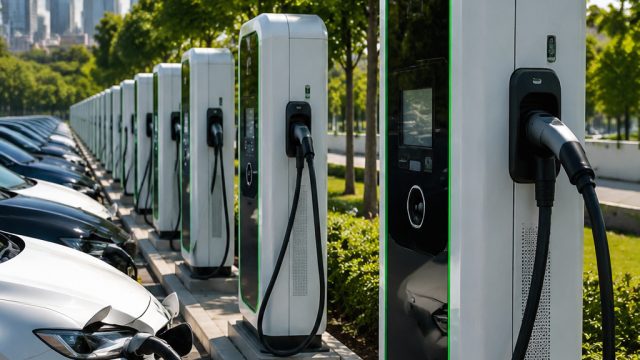
As the world shifts towards sustainable energy and environmentally friendly technologies, China's recent achievement of surpassing 22 million electric vehicle (EV) charging stations by the end of May sets a remarkable benchmark. This milestone represents not just a number, but a significant stride towards fostering a greener future amidst a rapidly changing global landscape.
The Significance of Charging Infrastructure
Charging infrastructure plays a critical role in the adoption of electric vehicles. With the continuous rise in EV ownership, an array of charging options has become essential for supporting consumers' new transportation choices. China's extensive investment in charging networks highlights its commitment to reducing carbon emissions and enhancing urban air quality.
Why Now Matters More Than Ever
The urgency for transitioning to electric vehicles has never been greater. Climate change concerns and urban pollution levels are escalating, prompting governments and communities to seek efficient solutions. China, being one of the largest automobile markets, recognizes the need for a robust charging ecosystem to meet the growing demand for EVs. The 22 million charging stations not only accommodate the current user base but also facilitate future growth in electric mobility.
A Closer Look at the Growth
The rapid expansion of charging stations in China can be attributed to several factors:
- Incentive Programs: The Chinese government offers various incentives for EV buyers, which in turn boosts the demand for accessible charging solutions.
- Public-Private Partnerships: Collaboration between state and private entities has led to the swift development of charging infrastructure across urban and rural landscapes.
- Technological Advancements: Innovative technologies are being integrated into charging stations, offering faster charging times and improved user experiences.
Innovations in Charging Technology
With the expansion of EV charging stations, technology has also evolved. Some notable advancements include:
- Fast Charging Options: Newer stations can deliver up to 80% charge in just 30 minutes, making long-distance travel more feasible.
- Smart Charging Solutions: Integration of app-based systems allows users to locate nearby stations and monitor charging progress remotely.
- Renewable Energy Sources: Many new stations are being powered by solar or wind energy, further enhancing sustainability efforts.
What This Means for the Future of Transportation
The significant expansion of EV charging stations in China is a clear indicator of a broader trend where countries worldwide are pivoting towards electric mobility. With this robust infrastructure in place, consumers are likely to feel more confident about making the switch from traditional vehicles to electric alternatives.
Global Impact and Lessons Learned
China's journey offers valuable insights for other nations aiming to bolster their own charging networks:
- Investment in Infrastructure: Substantial funding and commitment from both government and industry are essential for rapid development.
- Consumer Education: Informing the public about the benefits of EVs and charging options can accelerate adoption.
- Collaboration: Engaging multiple stakeholders, including local businesses and environmental groups, fosters a community-centric approach.
Conclusion: A Bright Future Ahead
As China continues to enhance its electric vehicle charging infrastructure, the world watches with interest. The achievement of over 22 million charging stations marks a critical juncture not just for China, but for global efforts to transition into a sustainable future. By prioritizing clean energy solutions, China is not only addressing its own environmental challenges but also setting an example for other nations to aspire to. The road ahead is bright, and the momentum towards electric mobility is unmistakable.
