





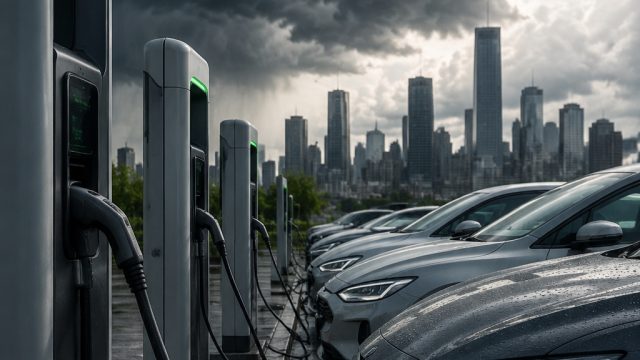
The recent downturn in technology stocks, particularly in semiconductor companies like Nvidia, Micron, and AMD, has sent shockwaves through the market, raising questions about the future of various tech-driven sectors, including electric vehicle (EV) charging solutions. As the stock market faces volatility, understanding how these economic shifts correlate with the EV industry is crucial for consumers and investors alike.
The Current State of Tech Stocks
This week has seen a notable sell-off in tech stocks, driven primarily by cooling interest in AI investments and broader concerns over semiconductor supply chains. The S&P 500 and Nasdaq both reported significant declines, with semiconductor stocks, in particular, experiencing a rough patch. Investing in high-growth sectors like AI and electric vehicles has become increasingly scrutinized as market dynamics shift.
Key Players Affected
- Nvidia: Once a darling in the tech sector due to its advanced AI capabilities, Nvidia is witnessing a downturn as investors reevaluate future growth.
- Micron: As a leader in memory chips, Micron's stock has felt the brunt of the semiconductor issues, impacting its share price significantly.
- AMD: Advanced Micro Devices is facing challenges, paralleling the broader tech stock decline.
Impact on the EV Charging Ecosystem
With tech stocks faltering, the implications for the EV charging sector are profound. Many EV charging solutions depend on advanced semiconductor technologies, which are now facing uncertainty. Here’s how this impacts the industry:
Supply Chain Disruptions
The semiconductor shortage that has plagued various industries will likely continue to affect EV charging solutions. With major chip manufacturers like Micron experiencing declines, the supply of crucial components for EV chargers may dwindle. This could lead to:
- Increased costs for EV infrastructure development
- Delayed rollout of charging stations
- Longer wait times for consumers to access reliable charging options
Investment Sentiment and Future Growth
The cooling of the AI trade also reflects a broader shift in investor sentiment. While the EV market is still on an upward trajectory, the confidence of investors can greatly influence funding and innovation in the sector. Potential investors might become more cautious, leading to:
- Hesitation in funding new EV charging projects
- Reassessment of existing investments in the EV sector
- Opportunities for innovation amidst challenges
What Lies Ahead for EV Charging Solutions
Despite the current challenges posed by the tech stock decline, the growing demand for electric vehicles remains a driving force in the market. As companies pivot towards more sustainable energy solutions, the need for reliable and extensive EV charging infrastructure becomes increasingly critical. Here are some considerations for the EV charging future:
Strategic Adaptations
Companies in the EV charging sector must strategize to mitigate the impact of these market fluctuations. Options include:
- Exploring alternative supply sources for semiconductor components
- Investing in R&D to develop more efficient technologies
- Building partnerships to strengthen supply chains
Increased Focus on Sustainability
The shift towards a greener future means that even amid market volatility, sustainable solutions will continue to attract consumer and investor interest. Companies that innovate in the EV charging realm could position themselves favorably when the market stabilizes.
Conclusion
As the tech stock market grapples with uncertainty, stakeholders in the EV charging solutions industry must remain vigilant and adaptive. The intertwining of technology and sustainability continues to shape the future, and while challenges loom, the necessity for EV infrastructure makes this sector a vital focus for the coming years. By understanding the ripple effects of tech declines and adjusting accordingly, companies can help ensure the resilience and growth of EV charging solutions moving forward.
